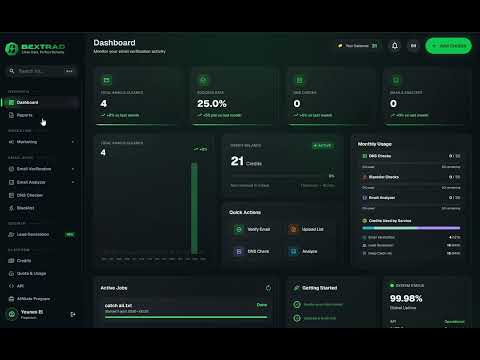
Bextrad is an all-in-one email verification, deliverability, and lead generation platform built for businesses that need clean, accurate contact data and inbox-ready campaigns.
Verify email addresses at scale, detect catch-all inboxes with deep analysis, monitor DNS records and blacklist status, audit spam scores before you send, and generate verified B2B leads, all from a single platform with full API access.
Features include:
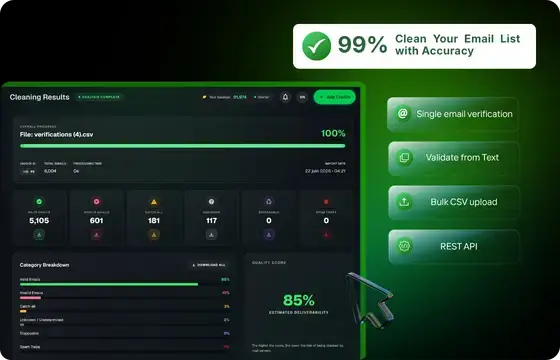
Bulk list cleaning and verification
Deep catch-all detection
DNS checks and blacklist monitoring
Email Analyzer with temporary inbox spam-score testing
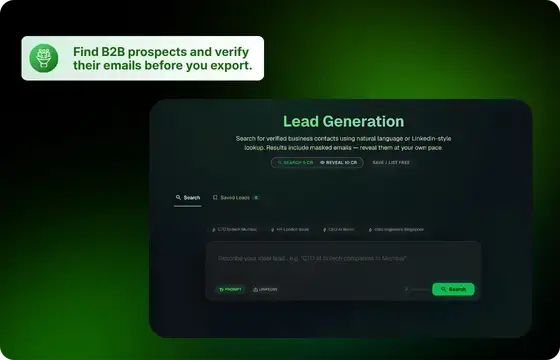
AI-powered lead generation
Multi-SMTP campaign sending with deliverability checks built in
Full REST API and native MCP server for AI agent integration
Affiliate program for partners
Perfect for sales teams, marketers, growth agencies, and data managers who need reliable lead data and clean inbox placement, end to end.
About Bextrad
Bextrad is a business product listed on Uneed, with a free tier and paid plans. It's tagged with Emails, API & Data. See the best Emails products for related options.
Frequently asked questions about Bextrad
What is Bextrad?
Bextrad is clean lists, verified leads, and spam-safe deliverability — all in one platform.
Is Bextrad free?
Bextrad offers a free tier with paid plans available for additional features.
What are alternatives to Bextrad?
Discover similar emails, api & data, lead acquisition products in the Uneed directory.
What category does Bextrad belong to?
Bextrad is listed under Business on Uneed.
What users say about Bextrad
SpinHire
Catch-all detection is the part I'd want to understand. We email hiring teams at small game and tech studios, and a big share of their domains accept anything, so a plain SMTP check says valid for every guess. Our real trouble was not hard bounces but mail that was accepted and then went nowhere, which hurt the sender reputation without ever showing up in the bounce stats. When the deep analysis looks at a catch-all, what does it actually return: a probability per address, or just risky versus safe?
This product has no rewards yet.
This product has no deals yet.